
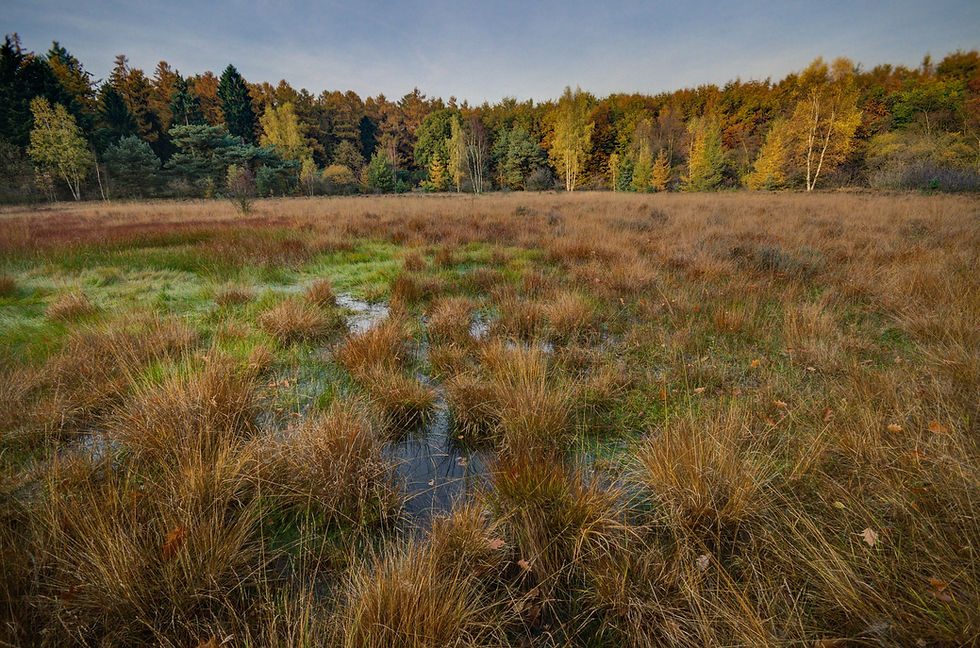
Wetland Conservation & Restoration for Water Security
Summary
The Conservation Society of Monavale (COSMO Trust) has worked for two decades to protect the Monavale Vlei - a wetland crucial to Harare's water security - from construction, housing, and cultivation. Since its initiation in 2000, COSMO Trust has partnered with local government and stakeholders, as well as international actors, to protect Harare's wetlands and ensure a more water-secure future for the city.
Much like most of Harare's headwater wetland ecosystems, the Monavale Vlei wetland - located in the Monavale suburb of Harare, Zimbabwe - has been threatened by anthropogenic activity throughout modern history, decreasing nearly 64% in size between 1972 and 2008; land-use changes have been identified as the primary driver of this degradation (Msipa, 2012). Rich in biodiversity, the Vlei, situated in the upper catchment area of the main Manyame River, is of critical importance to Harare's water security, as it is a primary source of water for Lake Chivero, the city's main water supply dam, located downstream of Harare (Murungweni, 2013; Nhapi, 2009; Wakeling, 2020).
The Conservation Society of Monavale (COSMO Trust, then known as Monavale Wetland Action Group) began its work in 2000, when a group of local stakeholders grew concerned about rose cultivation encroaching on the Monavale Vlei, one of Harare's most important wetlands. Although the main body of the core area of the wetland was already publicly owned, and, thereby theoretically protected from land-use change, abutting privately owned land on the wetland was threatened by the possibility of commercial rose cultivation. Informal cultivation on the contiguous (privately-owned) wetland area was also beginning to encroach on the conservation site (the protected public land), thereby further threatening the natural wetland habitat (Wakeling, 2020). In addition to land-use changes due to cultivation, developers have consistently targeted the wetland by planning development of housing complexes on the wetland, thereby further threatening this critical natural resource, of which Monavale Vlei wetland is an intact remnant (Murungweni, 2013; Sharai, Tawanda & Gladman, 2020; Sithole & Goredema, 2013).
Intervention
A birdwatching group, BirdLife Zimbabwe (BLZ), voiced the initial concern over wetland degradation, and soon after local community members and stakeholders quickly joined forces with the International Union for the Conservation of Nature to object to land-use change on the wetland (Wakeling, 2020). Birdlife International, provided funding to BLZ to purchase 10 hectares of privately-owned land on the Monavale Vlei and begin restoring that area as well (Wakeling, 2020). COSMO Trust, BLZ and Environment Africa (EA) were able to engage city administrators to permit the wetland restoration and conservation work. In 2005, the City of Harare designated Monavale Vlei (34 ha) as a model for wetland restoration and assembled a wetlands task force of government actors, community members, stakeholders, engineers, and environmental professionals to ensure the protection of the city's wetlands to help ensure long-term water security (Wakeling, 2020).
BLZ, through its partnership with BirdLife International, provided initial funds for the project. However, once COSMO articulated a clear action and restoration plan and obtained official buy-in from city administrators, the organization created a trust that eventually received a small grant from large international organizations, such as the United Nations Development Programme (UNDP) (Wakeling, 2020).
Conservation work on the Monavale Vlei started in 2000, when local community members and birdwatchers lobbied to protect the wetland habitat from invasive rose cultivation and formed COSMO. After BLZ obtained the funding to purchase 10 hectares of privately-owned land, COSMO began restoring the wetland and removing invasive species from the area. COSMO, BLZ, and EA developed a thorough management plan showcasing its proposed conservation efforts for the wetland, which was instrumental in attracting donors for the restoration efforts (Wakeling, 2020).
In 2005, the Monavale Vlei became a model for wetland restoration. A Local Environmental Subject Plan (LESP) 55 was drafted for the area to be included by the City of Harare into its Master Plan, however, this is yet to be incorporated into the Master Plan. In addition to formally partnering with the City of Harare, COSMO and its partners BLZ and EA worked alongside Zimbabwe's Environmental Management Agency and national Ministry of Environment, Water and Climate, as well as international organizations including the United Nations Educational, Scientific and Cultural Organization (UNESCO), among others (Matamanda & Chinozvina, 2020) . COSMO also received financial support from BLZ, EA and the UNDP, as well as donations from local community members, to hire an employee to monitor the wetland, including a full-time ranger to patrol the area and part-time laborers to periodically remove invasive plant species (Wakeling, 2020; Matamanda & Chinozvina, 2020).
In 2013, when Zimbabwe became a contracting partner of the Ramsar Convention, 509 hectares were designated as the Monavale Ramsar Site, including the Monavale Vlei core conservation area, thereby solidifying international commitment and interest in protecting this wetland. The conservation of Monavale Vlei is ongoing as COSMO and other local activists continue to protect the area and, in turn, Harare Metropolitan Area's long-term water security from development, farming, and other land-use changes (Wakeling, 2020).
Challenges
The successes of COSMO's work were not without challenges, as to be expected in an area with high-income inequality and extreme poverty, where it is challenging to balance short and long-term interventions. Some critics argue that the organization's citizen participation model was so successful because it centered around wealthy landowners who used their socioeconomic advantages to lobby for the conservation of the wetland in a process that could have been more participatory. This disparity highlights a dynamic underlying environmentalists' efforts that some critics consider to be classist or exclusionary and the inherent (and real) challenge of balancing long-term sustainability with the immediate need (Matamanda & Chinozvina, 2020).
Environmentalists, on the other hand, have complained of a perceived lack of political will to protect the wetland throughout the years, despite Monavale's designation as a Ramsar wetland of international importance and the government's maintained commitment to its conservation. This exemplifies the all-too-common challenge that policy makers face around balancing addressing immediate needs (housing, jobs, food security.) with long-term planning (source water protection). Disputes between environmentalists, developers, and farmers are still common, and anthropogenic activities still threaten the wetlands (Mandishona, 2017). Although environmentalists cite the need to protect the wetland, insisting that a healthy wetland will yield the benefits of enhanced water quality and quantity for all, developers and farmers often counter with a more immediate need to expand into the protected area in order to ensure housing or food security in a rapidly urbanizing city, pointing to a complex confluence of social, economic and political factors that disincentivize environmental protection (Mandishona, 2017; Sithole & Goredema, 2013 ). Zimbabwe's Environmental Management Agency recognizes the need to ensure that local stakeholders' livelihoods and dignity are not endangered by environmentalist efforts and typically tries to involve stakeholders via community planning platforms when engaging in conservation activities (Kangata, 2020). However, given that Monavale Vlei is a Ramsar site and that much of the wetland is privately owned, the government's reach in managing this land and equitably including stakeholders is limited (Kangata, 2020).
A proposed solution for this challenge set forth by COSMO is a 'Working for Wetlands' program that would utilize international grants to set up a program that employs people in wetland conservation activities. This model could alleviate the small-scale farmers and socioeconomically disadvantaged citizens' economic need to encroach on wetlands for personal use (Wakeling, 2020).
Outcomes
COSMO's wetland conservation efforts have reaped significant benefits for the region's natural headwater wetland ecosystem. The wetland restoration efforts undertaken in Monavale Vlei have seen improvements in stabilizing the region's hydrology, and have resulted in more water in surrounding areas, less intense droughts, and increased water quality (Sharai, Tawanda & Gladman, 2020). Studies have also shown that the Monavale Vlei conservation efforts have proven successful, as the natural land cover (flora) has slowly been restored, and native wildlife has increasingly returned since conservation efforts began (Shoshore, 2016).
Water quality analyses from Monavale indicate good water quality in all parameters, although the Marimba River receives a lot of sewage waste upstream from Monavale (Nhiwatiwa, 2019). The water quality tests indicate an enhanced self-purifying capacity of the restored Monavale Vlei, thereby illustrating the wetland restoration efforts' positive effects which contribute to water security (Nhiwatiwa, 2019). This self-purifying capacity is particularly significant for water managers, as the city of Harare sits directly atop the catchment. Typically, the catchment's water quality is significantly deteriorated by anthropogenic activities and requires very intensive treatment with a number of different chemicals before it can be distributed for consumption (Kangata, 2020). As such, the wetlands' self-purifying capacity is an important component of water quality management because it ensures that water entering the treatment plants is of a higher quality and, thus, requires less treatment (Kangata, 2020).
Ultimately, the Monavale Vlei restoration and conservation efforts have successfully enhanced the water quality and quantity in the city of Harare and serve as a useful model of navigating the complexity of balancing short-term decisions and long-term planning. In 2005, Monavale Vlei was designated as a model for wetland conservation throughout Harare. Since then, COSMO, together with the umbrella organization Harare Wetlands Trust (registered in 2016), have engaged other low-density communities and community-based organizations (CBOs) in high density areas throughout Harare to educate these communities on how to protect their wetlands (including the legal, environmental, technical, and financial aspects of wetland protection and restoration) (Wakeling, 2020). In 2014, COSMO's conservation efforts expanded from the Monavale Vlei to the highly degraded Marlborough Vlei, another wetland important for Harare's water security (Nhiwatiwa, 2019). Despite occasional tensions between the groups, government officials and activists all agree that nature-based solutions are among the most effective means of enhancing water security in the city of Harare, and wetland conservation will surely remain an essential part of the city's environmental management strategy (Kangata, 2020).
References
Wetland Conservation & Restoration for Water Security
Summary
The Conservation Society of Monavale (COSMO Trust) has worked for two decades to protect the Monavale Vlei - a wetland crucial to Harare's water security - from construction, housing, and cultivation. Since its initiation in 2000, COSMO Trust has partnered with local government and stakeholders, as well as international actors, to protect Harare's wetlands and ensure a more water-secure future for the city.
Much like most of Harare's headwater wetland ecosystems, the Monavale Vlei wetland - located in the Monavale suburb of Harare, Zimbabwe - has been threatened by anthropogenic activity throughout modern history, decreasing nearly 64% in size between 1972 and 2008; land-use changes have been identified as the primary driver of this degradation (Msipa, 2012). Rich in biodiversity, the Vlei, situated in the upper catchment area of the main Manyame River, is of critical importance to Harare's water security, as it is a primary source of water for Lake Chivero, the city's main water supply dam, located downstream of Harare (Murungweni, 2013; Nhapi, 2009; Wakeling, 2020).
The Conservation Society of Monavale (COSMO Trust, then known as Monavale Wetland Action Group) began its work in 2000, when a group of local stakeholders grew concerned about rose cultivation encroaching on the Monavale Vlei, one of Harare's most important wetlands. Although the main body of the core area of the wetland was already publicly owned, and, thereby theoretically protected from land-use change, abutting privately owned land on the wetland was threatened by the possibility of commercial rose cultivation. Informal cultivation on the contiguous (privately-owned) wetland area was also beginning to encroach on the conservation site (the protected public land), thereby further threatening the natural wetland habitat (Wakeling, 2020). In addition to land-use changes due to cultivation, developers have consistently targeted the wetland by planning development of housing complexes on the wetland, thereby further threatening this critical natural resource, of which Monavale Vlei wetland is an intact remnant (Murungweni, 2013; Sharai, Tawanda & Gladman, 2020; Sithole & Goredema, 2013).
Issue
Intervention
A birdwatching group, BirdLife Zimbabwe (BLZ), voiced the initial concern over wetland degradation, and soon after local community members and stakeholders quickly joined forces with the International Union for the Conservation of Nature to object to land-use change on the wetland (Wakeling, 2020). Birdlife International, provided funding to BLZ to purchase 10 hectares of privately-owned land on the Monavale Vlei and begin restoring that area as well (Wakeling, 2020). COSMO Trust, BLZ and Environment Africa (EA) were able to engage city administrators to permit the wetland restoration and conservation work. In 2005, the City of Harare designated Monavale Vlei (34 ha) as a model for wetland restoration and assembled a wetlands task force of government actors, community members, stakeholders, engineers, and environmental professionals to ensure the protection of the city's wetlands to help ensure long-term water security (Wakeling, 2020).
BLZ, through its partnership with BirdLife International, provided initial funds for the project. However, once COSMO articulated a clear action and restoration plan and obtained official buy-in from city administrators, the organization created a trust that eventually received a small grant from large international organizations, such as the United Nations Development Programme (UNDP) (Wakeling, 2020).
Conservation work on the Monavale Vlei started in 2000, when local community members and birdwatchers lobbied to protect the wetland habitat from invasive rose cultivation and formed COSMO. After BLZ obtained the funding to purchase 10 hectares of privately-owned land, COSMO began restoring the wetland and removing invasive species from the area. COSMO, BLZ, and EA developed a thorough management plan showcasing its proposed conservation efforts for the wetland, which was instrumental in attracting donors for the restoration efforts (Wakeling, 2020).
In 2005, the Monavale Vlei became a model for wetland restoration. A Local Environmental Subject Plan (LESP) 55 was drafted for the area to be included by the City of Harare into its Master Plan, however, this is yet to be incorporated into the Master Plan. In addition to formally partnering with the City of Harare, COSMO and its partners BLZ and EA worked alongside Zimbabwe's Environmental Management Agency and national Ministry of Environment, Water and Climate, as well as international organizations including the United Nations Educational, Scientific and Cultural Organization (UNESCO), among others (Matamanda & Chinozvina, 2020) . COSMO also received financial support from BLZ, EA and the UNDP, as well as donations from local community members, to hire an employee to monitor the wetland, including a full-time ranger to patrol the area and part-time laborers to periodically remove invasive plant species (Wakeling, 2020; Matamanda & Chinozvina, 2020).
In 2013, when Zimbabwe became a contracting partner of the Ramsar Convention, 509 hectares were designated as the Monavale Ramsar Site, including the Monavale Vlei core conservation area, thereby solidifying international commitment and interest in protecting this wetland. The conservation of Monavale Vlei is ongoing as COSMO and other local activists continue to protect the area and, in turn, Harare Metropolitan Area's long-term water security from development, farming, and other land-use changes (Wakeling, 2020).
Challenges
The successes of COSMO's work were not without challenges, as to be expected in an area with high-income inequality and extreme poverty, where it is challenging to balance short and long-term interventions. Some critics argue that the organization's citizen participation model was so successful because it centered around wealthy landowners who used their socioeconomic advantages to lobby for the conservation of the wetland in a process that could have been more participatory. This disparity highlights a dynamic underlying environmentalists' efforts that some critics consider to be classist or exclusionary and the inherent (and real) challenge of balancing long-term sustainability with the immediate need (Matamanda & Chinozvina, 2020).
Environmentalists, on the other hand, have complained of a perceived lack of political will to protect the wetland throughout the years, despite Monavale's designation as a Ramsar wetland of international importance and the government's maintained commitment to its conservation. This exemplifies the all-too-common challenge that policy makers face around balancing addressing immediate needs (housing, jobs, food security.) with long-term planning (source water protection). Disputes between environmentalists, developers, and farmers are still common, and anthropogenic activities still threaten the wetlands (Mandishona, 2017). Although environmentalists cite the need to protect the wetland, insisting that a healthy wetland will yield the benefits of enhanced water quality and quantity for all, developers and farmers often counter with a more immediate need to expand into the protected area in order to ensure housing or food security in a rapidly urbanizing city, pointing to a complex confluence of social, economic and political factors that disincentivize environmental protection (Mandishona, 2017; Sithole & Goredema, 2013 ). Zimbabwe's Environmental Management Agency recognizes the need to ensure that local stakeholders' livelihoods and dignity are not endangered by environmentalist efforts and typically tries to involve stakeholders via community planning platforms when engaging in conservation activities (Kangata, 2020). However, given that Monavale Vlei is a Ramsar site and that much of the wetland is privately owned, the government's reach in managing this land and equitably including stakeholders is limited (Kangata, 2020).
A proposed solution for this challenge set forth by COSMO is a 'Working for Wetlands' program that would utilize international grants to set up a program that employs people in wetland conservation activities. This model could alleviate the small-scale farmers and socioeconomically disadvantaged citizens' economic need to encroach on wetlands for personal use (Wakeling, 2020).
Outcomes
COSMO's wetland conservation efforts have reaped significant benefits for the region's natural headwater wetland ecosystem. The wetland restoration efforts undertaken in Monavale Vlei have seen improvements in stabilizing the region's hydrology, and have resulted in more water in surrounding areas, less intense droughts, and increased water quality (Sharai, Tawanda & Gladman, 2020). Studies have also shown that the Monavale Vlei conservation efforts have proven successful, as the natural land cover (flora) has slowly been restored, and native wildlife has increasingly returned since conservation efforts began (Shoshore, 2016).
Water quality analyses from Monavale indicate good water quality in all parameters, although the Marimba River receives a lot of sewage waste upstream from Monavale (Nhiwatiwa, 2019). The water quality tests indicate an enhanced self-purifying capacity of the restored Monavale Vlei, thereby illustrating the wetland restoration efforts' positive effects which contribute to water security (Nhiwatiwa, 2019). This self-purifying capacity is particularly significant for water managers, as the city of Harare sits directly atop the catchment. Typically, the catchment's water quality is significantly deteriorated by anthropogenic activities and requires very intensive treatment with a number of different chemicals before it can be distributed for consumption (Kangata, 2020). As such, the wetlands' self-purifying capacity is an important component of water quality management because it ensures that water entering the treatment plants is of a higher quality and, thus, requires less treatment (Kangata, 2020).
Ultimately, the Monavale Vlei restoration and conservation efforts have successfully enhanced the water quality and quantity in the city of Harare and serve as a useful model of navigating the complexity of balancing short-term decisions and long-term planning. In 2005, Monavale Vlei was designated as a model for wetland conservation throughout Harare. Since then, COSMO, together with the umbrella organization Harare Wetlands Trust (registered in 2016), have engaged other low-density communities and community-based organizations (CBOs) in high density areas throughout Harare to educate these communities on how to protect their wetlands (including the legal, environmental, technical, and financial aspects of wetland protection and restoration) (Wakeling, 2020). In 2014, COSMO's conservation efforts expanded from the Monavale Vlei to the highly degraded Marlborough Vlei, another wetland important for Harare's water security (Nhiwatiwa, 2019). Despite occasional tensions between the groups, government officials and activists all agree that nature-based solutions are among the most effective means of enhancing water security in the city of Harare, and wetland conservation will surely remain an essential part of the city's environmental management strategy (Kangata, 2020).
Issues |
|---|
Water Scarcity and Access |
Solutions |
|---|
Sustainable Water Supply & Climate Solutions |
References
Kangata, Steady. (2020, December 9). EcoCiv Interview with Steady Kangata, Director of Environmental Management Services at the Environmental Management Agency (EMA) of Zimbabwe.
Mandishona, E. (2017). Human utilisation and environmental quality of wetlands: the case of Harare, Zimbabwe (Doctoral dissertation).
Matamanda, A. R., & Chinozvina, Q. L. (2020). Driving Forces of Citizen Participation in Urban Development Practice in Harare, Zimbabwe. Land Use Policy, 99, 105090.
Msipa, M. (2012). Land use changes between 1972 and 2008 and current water quality of wetlands in Harare, Zimbabwe.
Murungweni, F. M. (2013). Effect of Land Use Change on Quality of Urban Wetlands: A Case of Monavale Wetland in Harare. Geoinfor Geostat: An Overview S1. of, 5, 2.
Nhapi, I. (2009). The water situation in Harare, Zimbabwe: a policy and management problem. Water Policy, 11(2), 221–235.
Nhiwatiwa, T. (2019). Water Quality Study of Monavale and Marlborough Wetlands (2014-2015). University of Zimbabwe Department of Biological Sciences.
Sharai, S., Tawanda, T., & Gladman, C. (2020). Threats and Conservation Strategies on Urban Wetlands: A Case of Monavale and Surrounding Areas in Harare, Zimbabwe. American Journal of Environmental Protection, 9(2), 36–43.
Shoshore, I. (2016). An assessment of a vlei ecosystem restoration process: Monavale Vlei, Harare.
Sithole, A., & Goredema, B. (2013). Building in wetlands to meet the housing demand and urban growth in Harare. International Journal of Humanities and Social Science, 3(8).
Wakeling, Dorothy. (2020, November 6). EcoCiv Interview with Dorothy Wakeling, Project Manager at Conservation Society of Monavale (COSMO).